
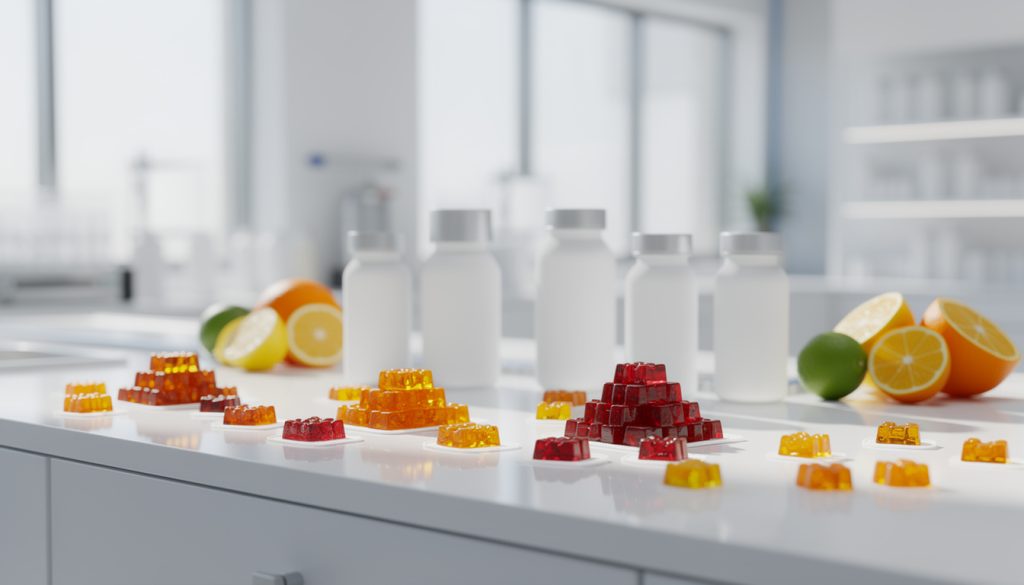
How to Successfully Launch Your Own Private Label Supplement Gummies Brand comes down to a structured progression: formula selection, manufacturer vetting, rigorous analytical validation, realistic budgeting, and compliant market entry. Private label gummy supplements offer a fast, cost-effective route to market. That holds only when operational risks, production parameters, and quality benchmarks are addressed before the first purchase order is signed.
Stock Formula or Custom Formulation: Which Route Fits a New Brand?
White label supplements and turnkey stock formula options reach shelves fastest. They carry lighter testing burdens and lower minimum spend. Custom formulation allows proprietary ingredient balances, but development cycles stretch considerably. Semi-custom sits between the two, with custom flavoring or botanical additions layered onto a pre-stabilized base. Choosing the production route for a private label supplement sets the long-term margin structure, scalability, and brand defensibility more firmly than any packaging decision made later.
Pectin Gummies vs Gelatin Gummies
Gelatin gummies rely on animal collagen, while pectin gummies use a gelling agent extracted from citrus peels. The difference shows up in logistics. Gelatin softens at lower temperatures, so shipments through hot regions risk clumping or melting. Pectin tolerates heat better in transit and storage. Demand for vegan, vegetarian, kosher, and halal products has also made plant-based pectin the default for most modern formulations.
Red Flags and Audit Points When Choosing a Supplement Gummies Manufacturer
A reputable supplement gummies manufacturer or contract manufacturing (CMO) partner answers audit questions directly. Warning signs include evasive replies about facility inspections, no available batch records, no standard operating procedures, and third-party certifications that cannot be verified. The facility itself needs strict hygiene, environmental control, and validated equipment sanitization.
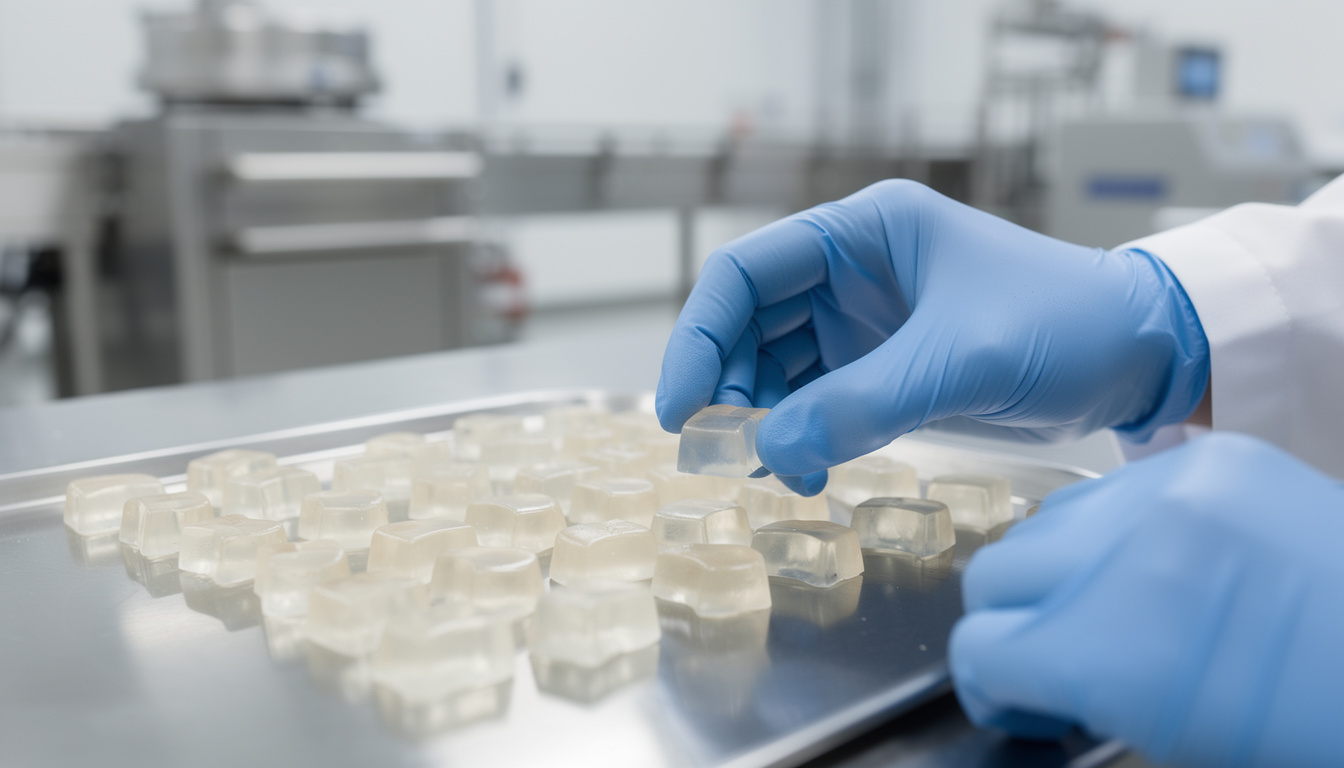
Certified GMP compliant manufacturing is the baseline. Audits typically examine raw material quarantine, supplier qualification programs, air filtration controls, and humidity management during gummy curing, the stage where moisture drift quietly ruins texture.
Batch Records and Traceability
Master manufacturing records define how a product must be made. Individual batch records document how each run was actually made. Together they secure batch-to-batch consistency, lot traceability, and clear accountability if an investigation ever occurs. Brands should receive these documents before, during, and after every production run.
Why Gummies Cannot Carry Everything: Formulation Limits and Shelf Life
A gummy is a food matrix governed by water activity, pH equilibrium, and hydrocolloid interactions, so it cannot hold the load of a tablet or capsule. Any dietary supplement format has trade-offs, but gummies typically support only 5% to 15% active weight per piece, a few hundred milligrams at most. Bulky minerals such as magnesium and calcium, along with bitter herbal extracts, often force multi-gummy servings. Hygroscopic botanical powders can pull moisture through the matrix and weaken its structure.
Taste adds another constraint. Sweetness, acidity from citric or malic acid, and active bitterness must be balanced together. Degradation follows three main paths: moisture loss that hardens the piece, high water activity that invites microbial growth, and sugar inversion that leaves a sticky, sweating surface. Real-time and accelerated stability testing confirm whether the target shelf life holds under the stated storage conditions.
Testing Benchmarks Before Any Batch Ships
Finished product testing verifies that actives match label declarations through the product's stated life. Potency verification runs on laboratory assays such as HPLC or mass spectrometry. A genuine Certificate of Analysis (COA) shows batch-specific results that fall within release specifications, ideally issued or confirmed through third-party testing. Manufacturing overages, a small deliberate addition above 100% of the label claim, offset natural nutrient degradation.
Microbiological testing covers total aerobic microbial count, total yeasts and molds, and the absence of Salmonella, E. coli, and Staphylococcus aureus. Heavy metals testing by ICP-MS screens for lead, arsenic, cadmium, and mercury. Reserve samples from every batch stay in controlled storage for the full shelf life.
Budget, Lead Times, and Launch Mistakes: A Six-Month Map
Minimum order quantity (MOQ) usually sits in the low thousands of bottles for stock formulas and climbs to ten thousand or more for custom work. Lead time adds up through raw material sourcing, pilot testing, production with curing, and release testing, roughly three to five months in total. Reorder points are calculated backward from sales velocity, which prevents long stockouts and cash-flow bottlenecks.
Unit production cost typically accounts for only 30% to 40% of launch capital. The remainder goes to bottles, child-resistant caps, induction seals, tamper bands, graphic design, assay fees, freight forwarding, climate-controlled warehousing, and customer acquisition.
| Month | Focus | Output |
|---|---|---|
| 1 | Concept, formulation choice, partner vetting | Shortlisted manufacturers and a chosen route |
| 2 | Benchtop sampling, flavor approval, packaging design | Approved sample and label artwork |
| 3 | Contract execution, raw material procurement | Signed agreement and ingredients on order |
| 4 | Commercial production, curing, packaging | Finished, packed units |
| 5 | Release testing, COA sign-off, freight logistics | Cleared batch in transit |
| 6 | Warehouse intake, digital launch, retention monitoring | Live sales and early repeat data |
Labels, Claims, and Common Pitfalls
Packaging needs a supplement facts panel, active and inactive ingredient lists, allergen declarations, expiration date, lot code, and storage instructions. Structure and function claims are permitted. Disease-treatment claims are prohibited, and every statement needs a scientific substantiation file. Most failed launches share the same causes: untested flavor, undercapitalized marketing, thin retail margins, and packaging that lets moisture in.
Frequently Asked Questions
Is pectin or gelatin better for a new gummy brand?
Pectin generally suits new brands better. It handles heat during shipping and meets vegan, vegetarian, kosher, and halal expectations. Gelatin remains workable for products sold in cooler, controlled distribution.
Why do many gummy supplements require two or more pieces per serving?
The matrix can hold only a limited amount of active material. Bulky minerals and bitter extracts quickly exceed that limit, so the dose is split across several pieces.
What should a Certificate of Analysis confirm?
A COA should list batch-specific results for potency, microbial counts, and heavy metals, each measured against stated release specifications. It should also identify the testing laboratory and match the lot number on the product.
Which claims are acceptable on a gummy label?
Structure and function statements about supporting normal body processes are acceptable when backed by substantiation. Claims to diagnose, treat, cure, or prevent disease are not.
About the Business
Maya Plus is a leading manufacturer of high-quality food supplement and vitamin gummies, offering private label solutions tailored to the needs of health-conscious consumers, retailers, and businesses. The company specializes in innovative gummy formulations for men, women, kids, sports nutrition, and beauty applications.